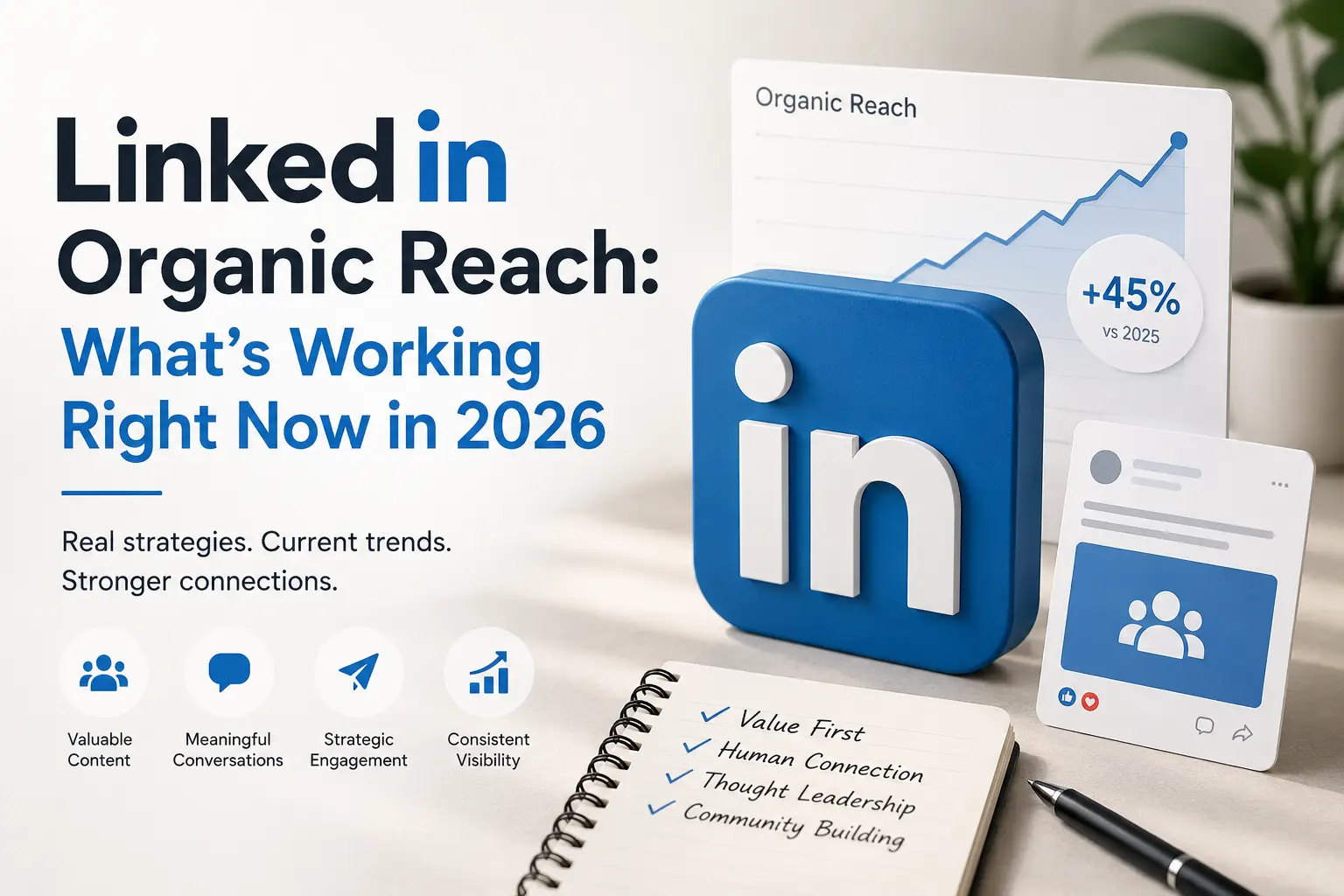
LinkedIn Organic Reach: What’s Working Right Now in 2026
LinkedIn is still one of the strongest organic channels in social media but 2026 has been a year of real upheaval. A rebuilt ranking engine, a crackdown on growth tactics, and shifting format performance mean a lot of the advice still floating around is already out of date. If your reach has dropped and you’re not sure why, you’re not imagining it.
This guide breaks down how the algorithm actually works right now, which content formats are winning, and the specific habits that separate accounts that are growing from accounts that have quietly stalled.
What Is LinkedIn Organic Reach?
Organic reach is the number of people who see your content without you paying to promote it driven purely by the algorithm’s decision to distribute your post to feeds, notifications, and search. It’s different from paid reach, which you buy through Sponsored Content and can target precisely regardless of how “good” the post is.
Organic reach matters because it’s compounding and free: a strong organic presence builds brand awareness, inbound leads, and credibility that paid ads alone can’t replicate, especially in B2B contexts where buyers research people before they research products.
How the LinkedIn Algorithm Works in 2026
The biggest shift of the year is structural. LinkedIn folded its old patchwork of ranking models one for likes, one for hashtags, one for network signals into a single unified AI system called 360Brew, which now evaluates content holistically rather than through separate scoring passes.
Initial Content Quality Check
Every post first passes through a quality and spam filter. With AI-generated content flooding the platform, this gate has gotten noticeably stricter in 2026 the system checks for spam patterns, topical relevance, and whether a post reads as genuinely useful before it’s shown to anyone.
Early Engagement Signals
Once a post clears the initial check, it’s tested with a small slice of your audience. What happens next determines its ceiling. The signal hierarchy has changed: saves now carry roughly five times the weight of a like and about twice the weight of a comment, because bookmarking something for later is a much stronger quality signal than a passive tap. Dwell time how long someone actually spends looking at your post has become one of the single most important ranking inputs.
Audience Relevance
360Brew also checks you, not just the post. It reads your headline, About section, and experience to judge whether you have credibility on the topic you’re posting about, then matches your content to first-degree connections, industry peers, and users with matching interests. Post consistently outside your stated area of expertise, and distribution quietly shrinks the algorithm treats topic mismatch as a trust signal problem.
Content Formats That Perform Best
Format performance has shifted meaningfully in 2026, and the picture is more nuanced than a single “best format” ranking.
Documents and Carousels
Multi-slide document posts remain the strongest format for engagement and dwell time in most 2026 analyses, generating meaningfully higher reach and engagement than the platform average every swipe is a dwell-time signal the algorithm rewards. They work especially well for frameworks, step-by-step breakdowns, and data-heavy storytelling. That said, a mid-2026 update to B2B distribution has narrowed the gap: native text posts have started outperforming carousels for some B2B accounts, so it’s worth testing both rather than assuming carousels automatically win.
Native Videos
Short native video (under 60–90 seconds) still pulls strong raw reach, and personal, unpolished videos consistently beat highly produced corporate clips. But video’s overall reach has cooled compared to last year, and it tends to generate fewer comments than text or documents since watching is a passive action.
Text-Only Posts
Well-hooked text posts remain the most efficient format for reach relative to effort. The sweet spot is roughly 150–300 words with a strong opening line, since the algorithm reads the actual text of your post now instead of relying on tags or metadata.
Images and Infographics
Multi-image posts are a strong middle ground they sustain dwell time better than a single image without requiring the production effort of a full carousel, and they work well for statistics, case studies, and before/after visuals.
Polls
Polls have effectively been neutralized. LinkedIn’s March 2026 “Authenticity Update” pushed poll engagement down to a fraction of a percent, treating them as a low-effort format that inflates reach numbers without producing real interaction. Use them sparingly, if at all.
What Types of Content Generate the Most Engagement?
Regardless of format, the topics and angles that consistently perform in 2026 include:
- Personal experiences and specific, first-hand stories
- Original data, research, or proprietary insights
- Data-backed opinions and contrarian takes with evidence
- Customer success stories and case studies
- Lessons learned from failures vulnerability outperforms polish
- Actionable how-to content readers can apply immediately
- Timely trend analysis tied to your area of expertise
Best Practices to Increase LinkedIn Organic Reach
Write Strong Hooks
You have about two lines before someone decides to keep scrolling. Lead with a specific, concrete statement or question rather than a vague setup.
Focus on Value First
Educate before you promote. Posts that read as thinly veiled advertisements get filtered out at the initial quality-check stage before they ever reach a wider audience.
Encourage Meaningful Discussion
Ask genuine questions and invite real opinions. Generic comments like “Great post!” are now filtered out and no longer count as meaningful engagement signals, so the goal is to prompt specific, substantive replies.
Post Consistently
A steady, sustainable cadence most creators find 3–5 posts a week works well beats sporadic bursts. Consistency helps the algorithm build a clearer picture of your topic authority over time.
Engage Before and After Publishing
Spend time commenting on others’ posts before you publish, and respond to every comment on your own posts for the first hour or two afterward. This activity around a post’s publish window has a real effect on how far it initially travels.
Common Mistakes That Reduce Organic Reach
- Overusing external links links in the post body are no longer penalized as heavily as they once were, but stuffing a post with multiple outbound links still signals low quality
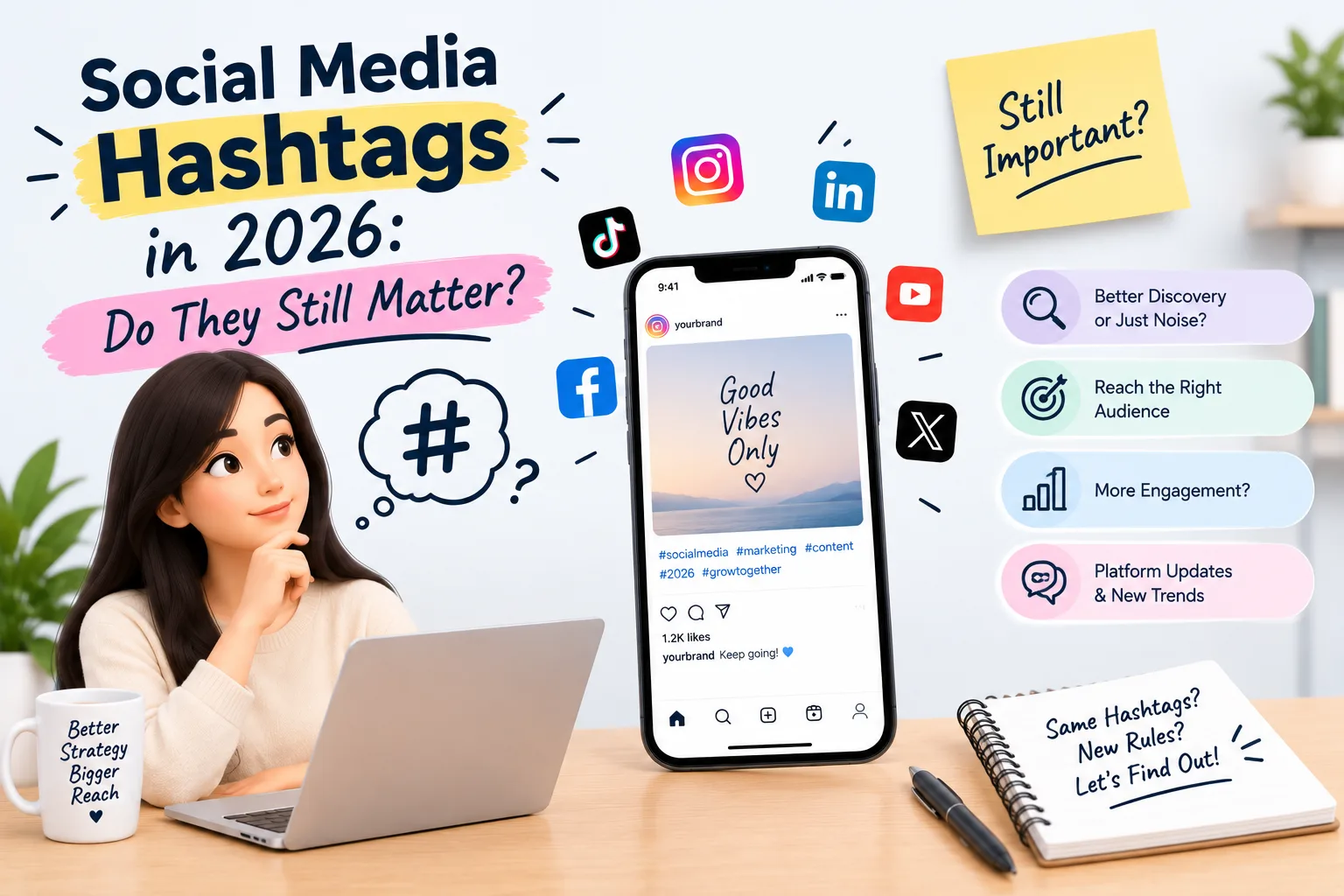
- Excessive hashtags the algorithm reads your actual text now, and hashtag stacking adds nothing and can look like spam
- Clickbait headlines that don’t deliver on their promise
- Publishing AI-generated drafts without real editing or personal input
- Constant promotional posting with no educational value in between
- Ignoring comments on your own content
- Posting without any sense of who your target audience actually is
LinkedIn SEO Tips for Better Discoverability
- Optimize your headline and About section with the specific topics you want to be known for this is now a direct credibility signal for the algorithm, not just a human-readable bio
- Use industry-specific language naturally within your posts rather than relying on hashtags
- Flesh out your Experience section so your profile supports your content topics
- Write post captions that use the terms your audience would actually search for
- Add descriptive alt text to images for accessibility and discoverability
- Post consistently on a narrow set of topics to build topical authority over time
AI and LinkedIn: How to Use AI Without Hurting Reach
AI tools are useful for brainstorming angles, outlining posts, and getting past a blank page but posting unedited AI output is one of the fastest ways to trigger the quality filter LinkedIn tightened this year. To use AI well:
- Use it for ideation and structure, not final copy
- Rewrite drafts in your own voice and rhythm
- Add specific personal examples and details AI can’t generate for you
- Double-check any facts, statistics, or claims before publishing
- Keep the perspective and opinions authentically yours
Measuring LinkedIn Organic Success
Track these metrics regularly to understand what’s actually working for your account:
- Impressions and reach
- Engagement rate (comments, shares, and saves weighted more heavily than likes)
- Comments, shares, and saves individually
- Profile views
- Follower growth
- Website clicks
- Lead generation from LinkedIn traffic
LinkedIn Organic Strategy Checklist
- Define your target audience clearly
- Optimize your profile to match your content topics
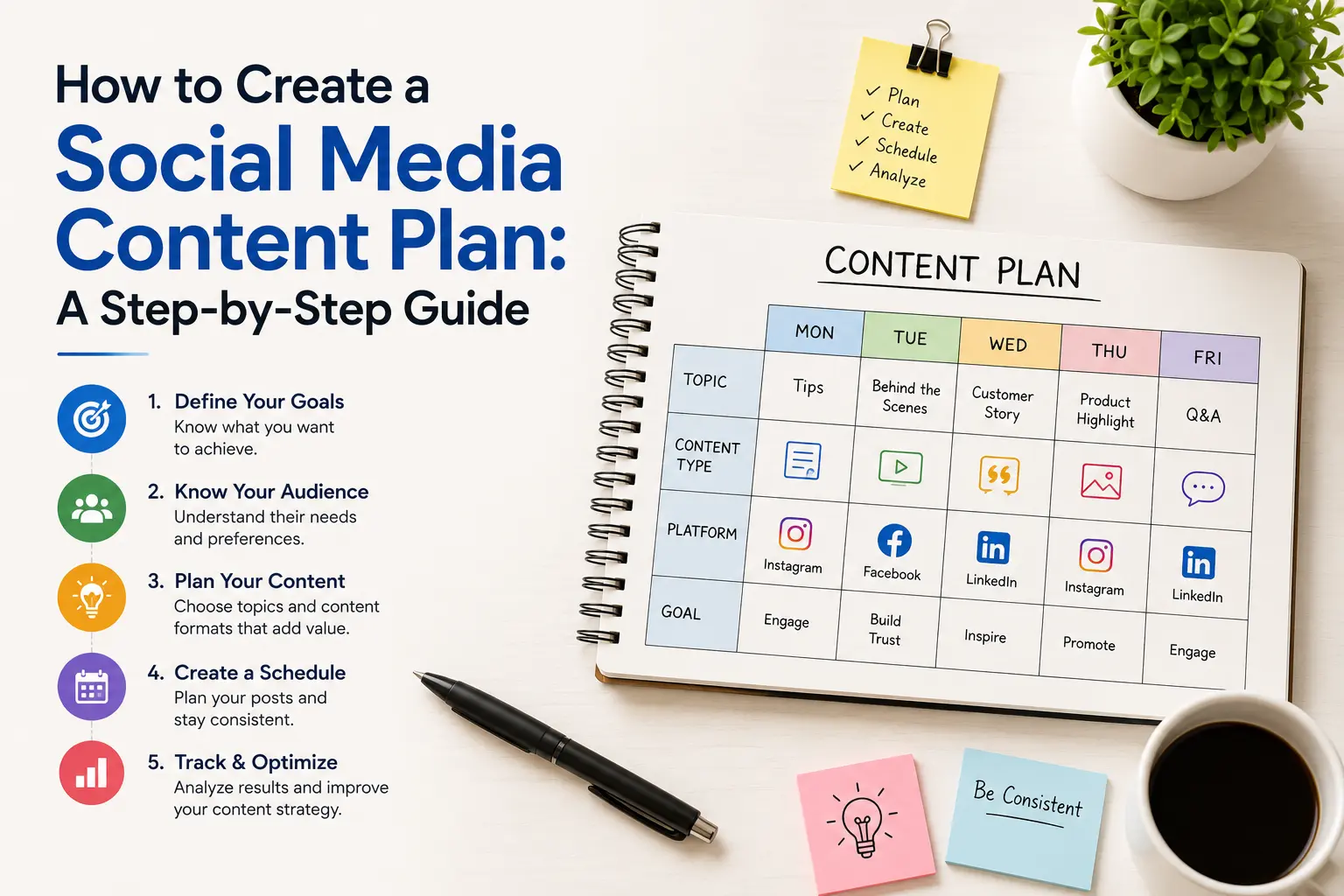
- Build a content calendar with a mix of formats
- Share original insights, not just commentary on others’ content
- Engage daily, both before and after you post
- Monitor analytics weekly, not just when reach drops
- Refine your strategy based on what the data actually shows, not what worked a year ago
1. How often should I post on LinkedIn?
Most creators see the best consistency-to-reach tradeoff at 3–5 posts per week. Quality and topical consistency matter more than raw frequency.
2. What is the best time to post on LinkedIn?
Early-to-mid morning on weekdays in your audience’s time zone tends to perform best, since it aligns with when professionals are checking the platform before the workday ramps up. Test your own audience’s activity patterns rather than relying on generic timing advice.
3. Do hashtags still matter on LinkedIn?
No, not in the way they used to. The algorithm now reads the actual text of your post to understand its topic, so hashtags add little value and stacking too many can look spammy.
4. Does AI-generated content affect LinkedIn reach?
Yes. Unedited AI content is more likely to be caught by the platform’s quality filters. AI-assisted content that’s genuinely edited and personalized performs fine.
5. Which content format gets the highest engagement?
Document posts and carousels lead most 2026 benchmarks for engagement and dwell time, though native text posts have closed the gap for some B2B accounts. Video wins on raw reach but tends to generate less active engagement.
6. How long does a LinkedIn post continue receiving engagement?
Most posts get the bulk of their engagement in the first 24–48 hours, though strong posts can continue surfacing in feeds and search for days afterward.
Conclusion
LinkedIn’s 2026 changes reward the same fundamentals that have always mattered genuine expertise, real value, and consistent effort but they’re now enforced more strictly by an algorithm that reads your profile, your text, and your audience’s behavior as a whole. Growth tactics like hashtag stuffing, poll bait, and comment pods have stopped working, while authentic storytelling, well-structured documents, and profiles with clear topical focus are winning.
The best path forward is to treat this as an ongoing experiment: test formats against your own audience, watch saves and dwell time as closely as likes, and keep refining based on what your specific account’s data tells you rather than last year’s playbook.