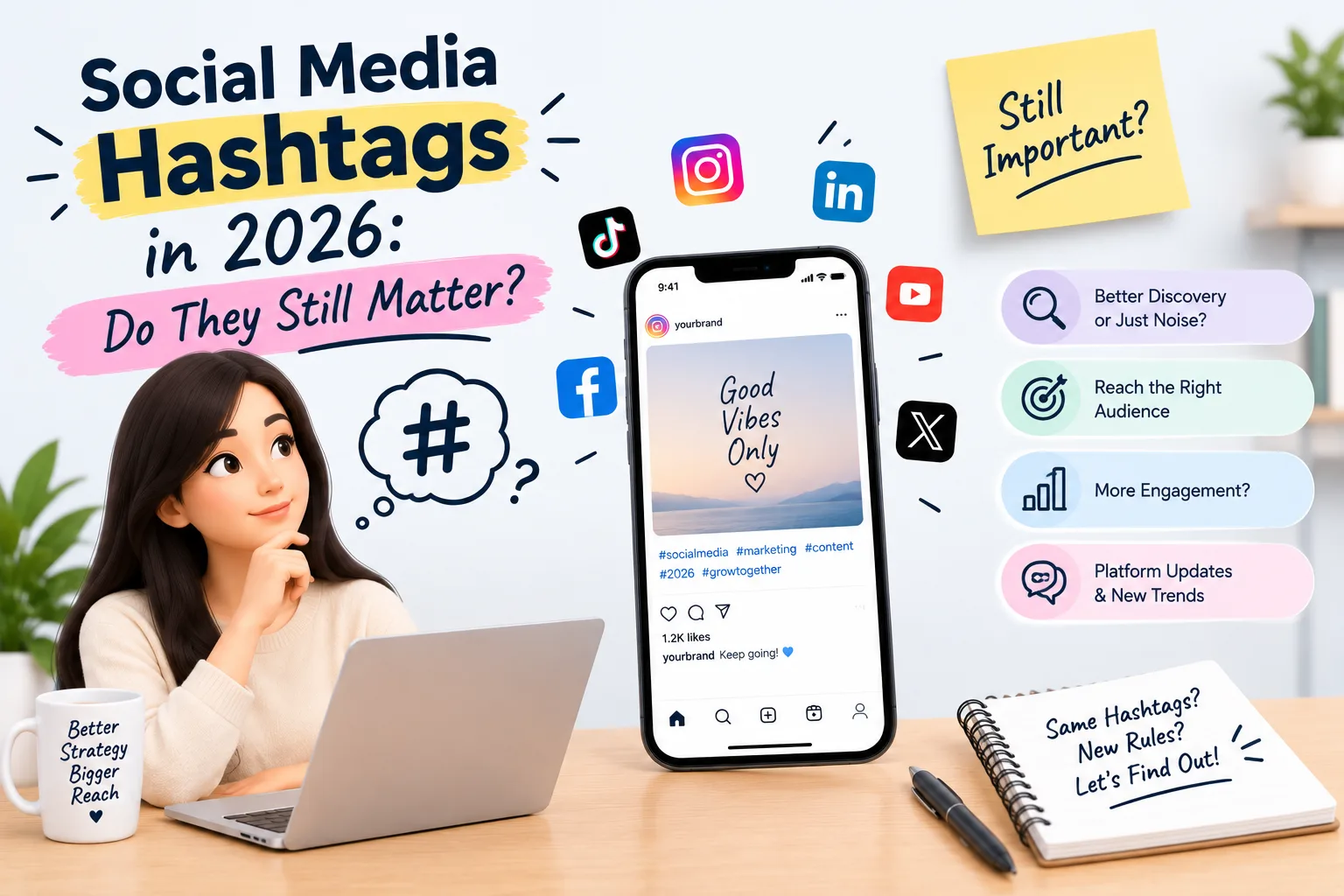
Social Media Hashtags in 2026: Do They Still Matter?
Not long ago, the advice was simple: add 30 hashtags and watch your reach grow. In 2026, that advice is outdated. Social media hashtags still exist, but their job has changed. Platforms now rely on AI-driven recommendations, keyword search and watch-time signals to decide what people see, so hashtags are no longer the main growth lever.
So do they still matter? Yes, but in a smaller, smarter role. This guide explains where hashtags still help, where they don’t, and how to use them without wasting effort.
Why Social Media Hashtags Lost Their Power
Hashtags were once the main way to get discovered. Their influence has faded for three reasons:
- Algorithms read content directly. Platforms analyze your captions, visuals, audio and on-screen text, so they no longer need a hashtag to understand your topic.
- Search is now keyword-based. People search on Instagram, TikTok and YouTube the way they search Google. Descriptive captions and spoken keywords carry more weight than tags.
- Spam fatigue. Years of overstuffed hashtag blocks pushed platforms to reduce their visibility and, in some cases, limit how many you can use.
Platform policies change often, so check each app’s current guidance before building a strategy around any single rule.
Do Hashtags Still Work on Each Platform?
Instagram has publicly said hashtags are not a major reach booster. They still help categorize your content, but captions, alt text and on-screen keywords matter more. Use a few highly relevant tags rather than a long list.
TikTok
Hashtags still play a supporting role, especially for niche communities and trends. The For You page is driven mainly by viewer behavior such as watch time, replays and shares. Pair 3 to 5 targeted hashtags with keyword-rich captions and spoken keywords.
LinkedIn hashtags have limited reach impact, but they help signal your topic. One to three professional tags (like #MarketingStrategy or #Leadership) is plenty.
X (Twitter)
Hashtags work best during live events, trending conversations and campaigns. Outside those moments, one tag at most is usually enough, and plain-language text performs better.
YouTube and Pinterest
On YouTube, titles, descriptions and spoken content do most of the work, with hashtags playing a minor role. Pinterest behaves like a search engine, so keywords in titles and descriptions come first, with hashtags as a light extra.
Where Hashtags Still Matter in 2026
- Topic categorization. They help platforms and users confirm what your post is about.
- Branded campaigns. A unique hashtag makes user-generated content easy to collect and track.
- Events and communities. Conference tags and niche community tags still drive real engagement.
- Trend participation. Joining a relevant trend early can still add visibility.
- Social listening. Brands use hashtags to monitor conversations and measure campaigns.
Where Hashtags Don’t Help Anymore
- Stuffing posts with dozens of tags
- Using generic, high-volume tags like #love or #instagood
- Using irrelevant trending tags just for reach
- Copying the same hashtag set into every post
These habits can make content look like spam and may hurt performance.
A Simple Hashtag Strategy for 2026
1. Lead with keywords, not hashtags. Write captions that naturally include the phrases your audience searches for.
2. Use 3 to 5 relevant hashtags. Mix one broad tag, two niche tags and one branded tag.
3. Choose niche over massive. A tag with a focused, active community beats one with millions of unrelated posts.
4. Place them naturally. Put hashtags at the end of a caption or woven into the text, and avoid clutter.
5. Track what works. Use platform analytics to see which tags correlate with reach and engagement, then drop the rest.
6. Create one branded hashtag. Keep it short, memorable and unique to your business.
Do Hashtags Help SEO?
Hashtags do not directly improve your Google rankings. However, social posts can appear in search results, and keyword-rich captions and profiles help your content get found both on-platform and off. Treat hashtags as a supporting signal, and put real optimization effort into captions, alt text, profile bios and content quality.
Final Verdict
Social media hashtags still matter in 2026, but they are a helper, not a growth hack. The brands winning today focus on valuable content, strong keywords, and engagement, then add a few well-chosen hashtags on top.
Frequently Asked Questions
Do hashtags still increase reach in 2026?
Only slightly. They help categorize content, but watch time, shares and relevance matter far more.
How many hashtags should I use?
Three to five relevant hashtags is a safe range for most platforms. On LinkedIn and X, use fewer.
Are hashtags or keywords better?
Keywords. Platform search and recommendation systems rely heavily on caption and spoken keywords, with hashtags as a secondary layer.
Should I still use a branded hashtag?
Yes. It’s one of the most useful ways to organize campaigns and user-generated content.
Can hashtags hurt my posts?
Yes. Spammy, irrelevant or excessive hashtags can make content look low quality.