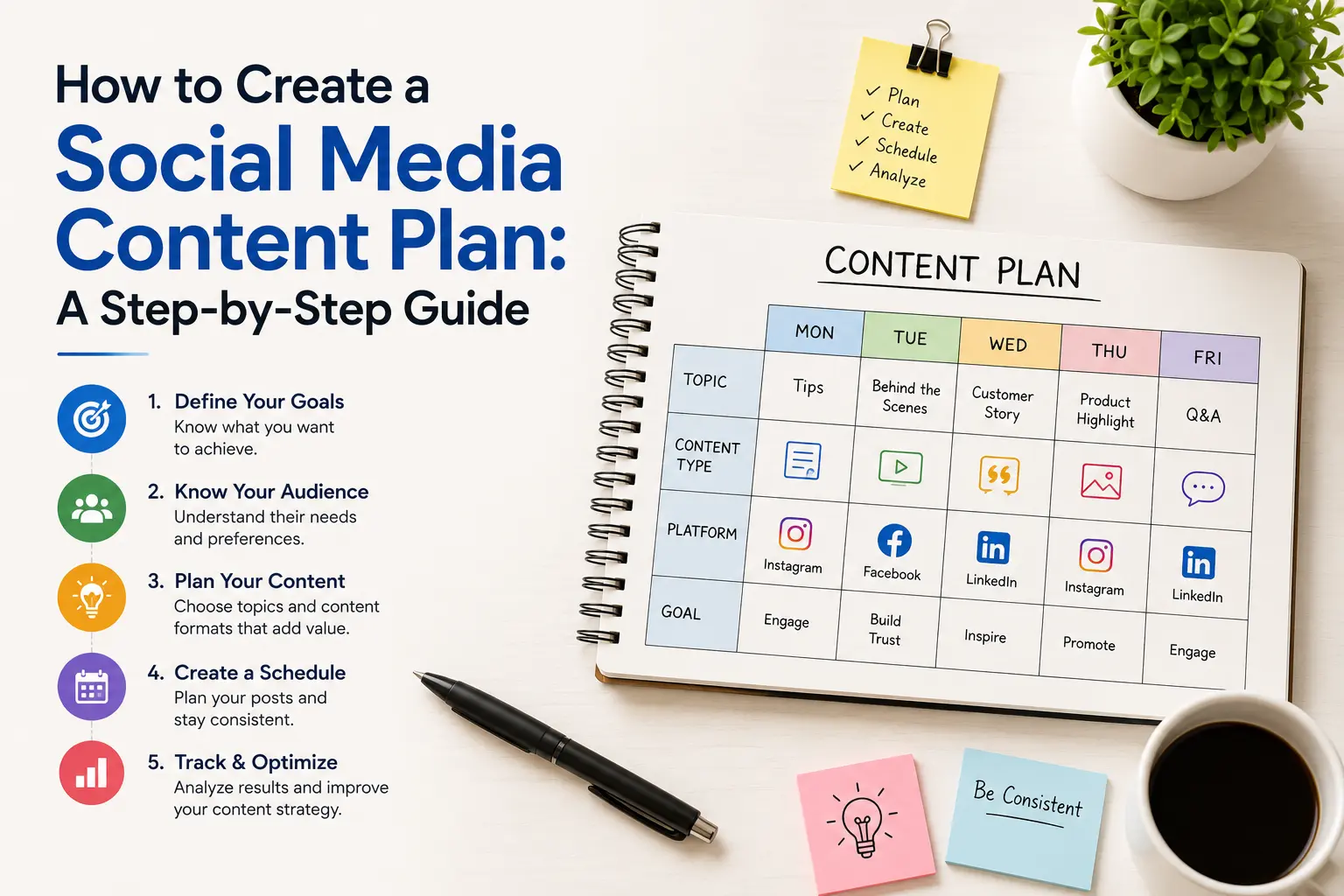
How to Create a Social Media Content Plan: A Step-by-Step Guide
Posting on social media without a strategy is like driving without a map you might move, but you won’t get anywhere useful. A solid social media content plan turns random posting into a repeatable system that builds your brand, grows your audience, and drives real business results.
In this guide, you’ll learn exactly how to create a social media content plan from scratch, including the tools, templates, and frameworks used by top marketers.
What Is a Social Media Content Plan?
A social media content plan is a documented strategy that outlines what you’ll post, when you’ll post it, where you’ll post it, and why. It typically includes your goals, target audience, content pillars, posting schedule, and the metrics you’ll use to measure success.
Unlike a simple content calendar (which is just a schedule), a full content plan covers the strategy behind the schedule the thinking that makes your posts actually work.
Why You Need a Social Media Content Plan
- Consistency: Regular posting keeps your brand top of mind and signals reliability to platform algorithms.
- Time savings: Batch planning content ahead of time cuts down on daily decision fatigue.
- Better results: Aligning content with clear goals makes it easier to track ROI and improve over time.
- Team alignment: A shared plan keeps everyone marketing, design, leadership on the same page.
Step 1: Define Your Social Media Goals
Before creating any content, get clear on what you want social media to achieve. Common goals include:
- Increasing brand awareness
- Driving website traffic
- Generating leads or sales
- Building community engagement
- Improving customer support response times
Use the SMART framework (Specific, Measurable, Achievable, Relevant, Time-bound) so you can actually track progress. For example: “Grow Instagram followers by 20% in Q1” is far more useful than “get more followers.”
Step 2: Know Your Target Audience
Your social media content plan should be built around who you’re actually trying to reach. Research your audience’s:
- Demographics (age, location, job title)
- Preferred platforms
- Pain points and interests
- Content consumption habits (video vs. text, short-form vs. long-form)
Tools like Meta Audience Insights, Google Analytics, and platform-native analytics can help you build accurate audience personas.
Step 3: Choose the Right Platforms
Don’t try to be everywhere. Focus on 2–3 platforms where your audience is most active and where your content format fits naturally:
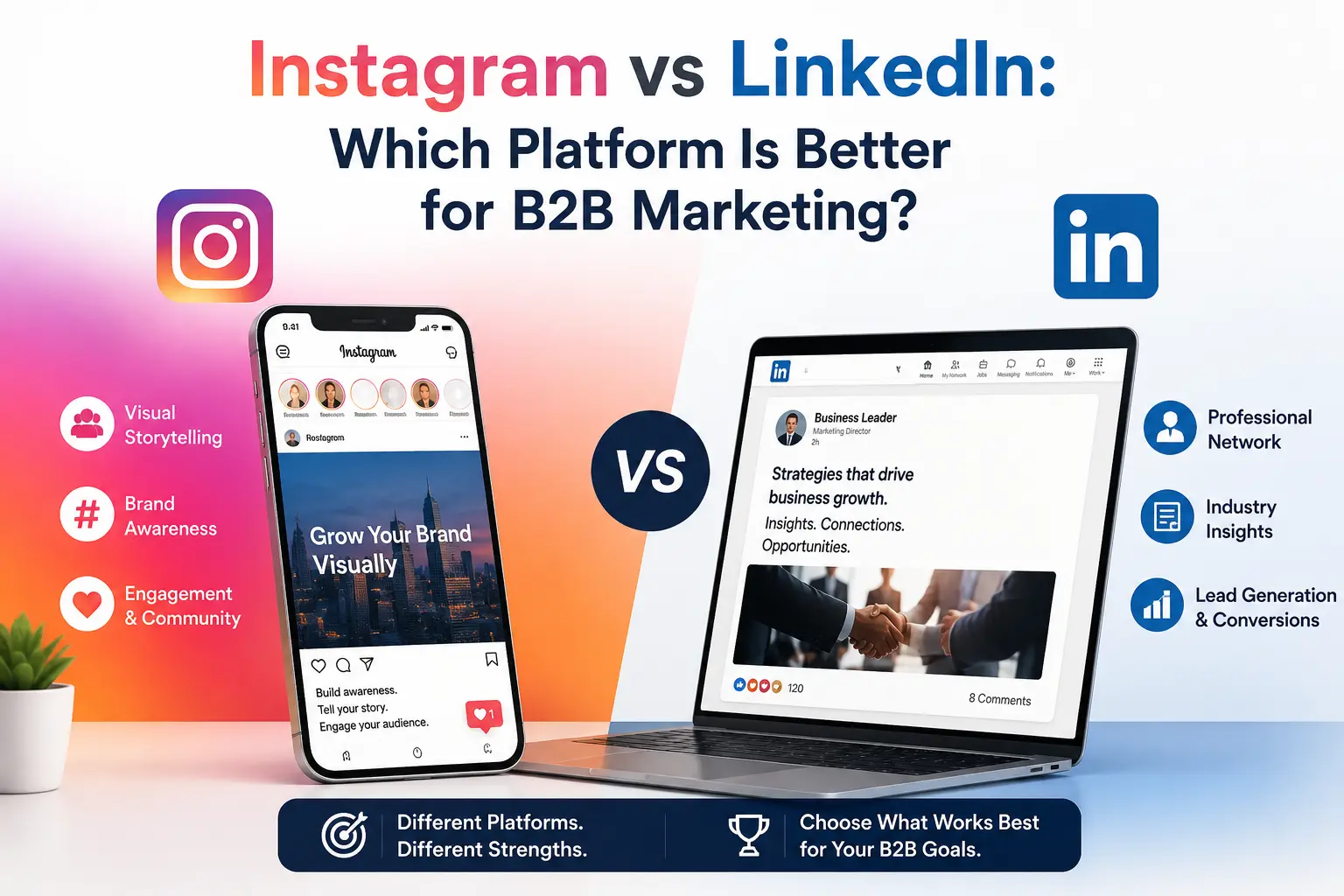
| Platform | Best For |
|---|---|
| Visual storytelling, Reels, product showcases | |
| B2B content, thought leadership, hiring | |
| TikTok | Short-form video, trend-driven content |
| X (Twitter) | Real-time updates, industry commentary |
| Community groups, local business promotion | |
| Evergreen visual content, driving traffic |
Step 4: Establish Content Pillars
Content pillars are the core themes your brand will consistently post about. Having 3–5 pillars keeps your content focused while still allowing variety. For example, a fitness brand might use:
- Workout tips
- Client success stories
- Nutrition advice
- Behind-the-scenes content
- Motivational quotes
Each pillar should tie back to your goals and audience interests from Steps 1 and 2.
Step 5: Decide on Content Formats and Mix
Diversify your formats to keep your feed engaging and to satisfy platform algorithms that favor varied content types:
- Short-form video (Reels, TikToks, Shorts)
- Carousels and infographics
- Static image posts
- Stories and polls
- Live streams
- User-generated content (UGC)
A common approach is the 80/20 rule: 80% educational or entertaining content, 20% promotional content.
Step 6: Build a Content Calendar
This is where your plan becomes actionable. Map out:
- Posting frequency per platform
- Specific dates and times (based on when your audience is most active)
- Which content pillar each post supports
- Captions, hashtags, and creative assets needed
Tools like Trello, Notion, Google Sheets, or dedicated platforms like Buffer, Hootsuite, and Later can simplify this process and allow for team collaboration.
Step 7: Create a Content Production Workflow
Even the best plan fails without a system to execute it. Define:
- Who writes captions, designs graphics, and edits video
- Approval and review steps
- Batch content creation days (e.g., one day a month to film a month’s worth of video)
- A repository for reusable assets (templates, brand fonts, logos)
Step 8: Schedule and Publish
Use a scheduling tool to queue content in advance rather than manually posting every day. This ensures consistency even during busy weeks and gives you time to focus on engagement instead of production.
Step 9: Monitor, Analyze, and Optimize
A content plan isn’t static it should evolve based on data. Track metrics tied to your original goals:
- Engagement rate (likes, comments, shares, saves)
- Reach and impressions
- Click-through rate
- Follower growth
- Conversion rate (for sales/lead goals)
Review performance monthly and adjust your content pillars, formats, or posting times based on what’s working.
Free Social Media Content Plan Template Structure
If you want to build your own, structure it like this:
- Goals – what you want to achieve
- Audience personas – who you’re targeting
- Platforms – where you’ll post
- Content pillars – what you’ll post about
- Posting schedule – when and how often
- Content calendar – specific post details
- KPIs – how you’ll measure success
Final Thoughts
Creating a social media content plan takes upfront effort, but it pays off in consistency, efficiency, and measurable results. Start with clear goals, understand your audience, define your pillars, and build a realistic calendar you can actually maintain then let the data guide your ongoing optimization.