Content Marketing vs Paid Advertising: Which Is Better?
Every marketer eventually faces the same question: should you invest in content marketing or paid advertising? Both strategies can drive traffic, leads, and revenue, but they work in fundamentally different ways. Understanding the difference between content marketing and paid advertising is essential for building a marketing plan that delivers sustainable, long-term results.
In this guide, we’ll break down how each strategy works, their pros and cons, and how to decide which one or what combination is right for your business.
What Is Content Marketing?
Content marketing is the practice of creating and distributing valuable, relevant content blog posts, videos, guides, infographics, podcasts, and more to attract, engage, and retain a clearly defined audience. Instead of directly promoting a product, content marketing builds trust and authority over time, eventually driving profitable customer action.
Common content marketing formats include:
- SEO-optimized blog articles
- YouTube videos and tutorials
- Email newsletters
- Case studies and whitepapers
- Social media posts and infographics
- Podcasts
What Is Paid Advertising?
Paid advertising involves paying to place your message in front of a target audience through channels like Google Ads, Meta Ads, LinkedIn Ads, or display networks. Unlike content marketing, paid ads deliver immediate visibility, but that visibility stops the moment you stop paying.
Common paid advertising formats include:
- Pay-per-click (PPC) search ads
- Social media ads (Facebook, Instagram, LinkedIn, TikTok)
- Display and banner ads
- Sponsored content and influencer partnerships
- Retargeting campaigns
Content Marketing vs Paid Advertising: Key Differences
1. Cost and Long-Term Value
Content marketing requires an upfront investment of time and effort, but once published, content continues to generate traffic and leads for months or years making it a compounding asset. Paid advertising, on the other hand, generates traffic only as long as the budget keeps flowing; turn off the campaign, and the traffic disappears instantly.
2. Speed of Results
Paid advertising wins here. Campaigns can go live within hours and start generating clicks and conversions almost immediately. Content marketing is a slower build SEO-driven content can take weeks or months to rank and gain traction.
3. Trust and Credibility
Audiences tend to trust organic content more than ads. Educational blog posts, helpful guides, and authentic videos build brand authority and customer loyalty. Paid ads are effective for visibility but are often perceived as less trustworthy, especially by skeptical, research-driven buyers.
4. Scalability and Control
Paid advertising offers precise targeting and instant scalability increase budget, and you can typically increase reach. Content marketing scales more gradually and depends on consistent quality, SEO optimization, and distribution effort.
5. Return on Investment (ROI)
Content marketing typically delivers a higher ROI over the long run because the same piece of content can keep generating leads without ongoing spend. Paid advertising ROI is generally more immediate but requires continuous investment to sustain results.
Pros and Cons at a Glance
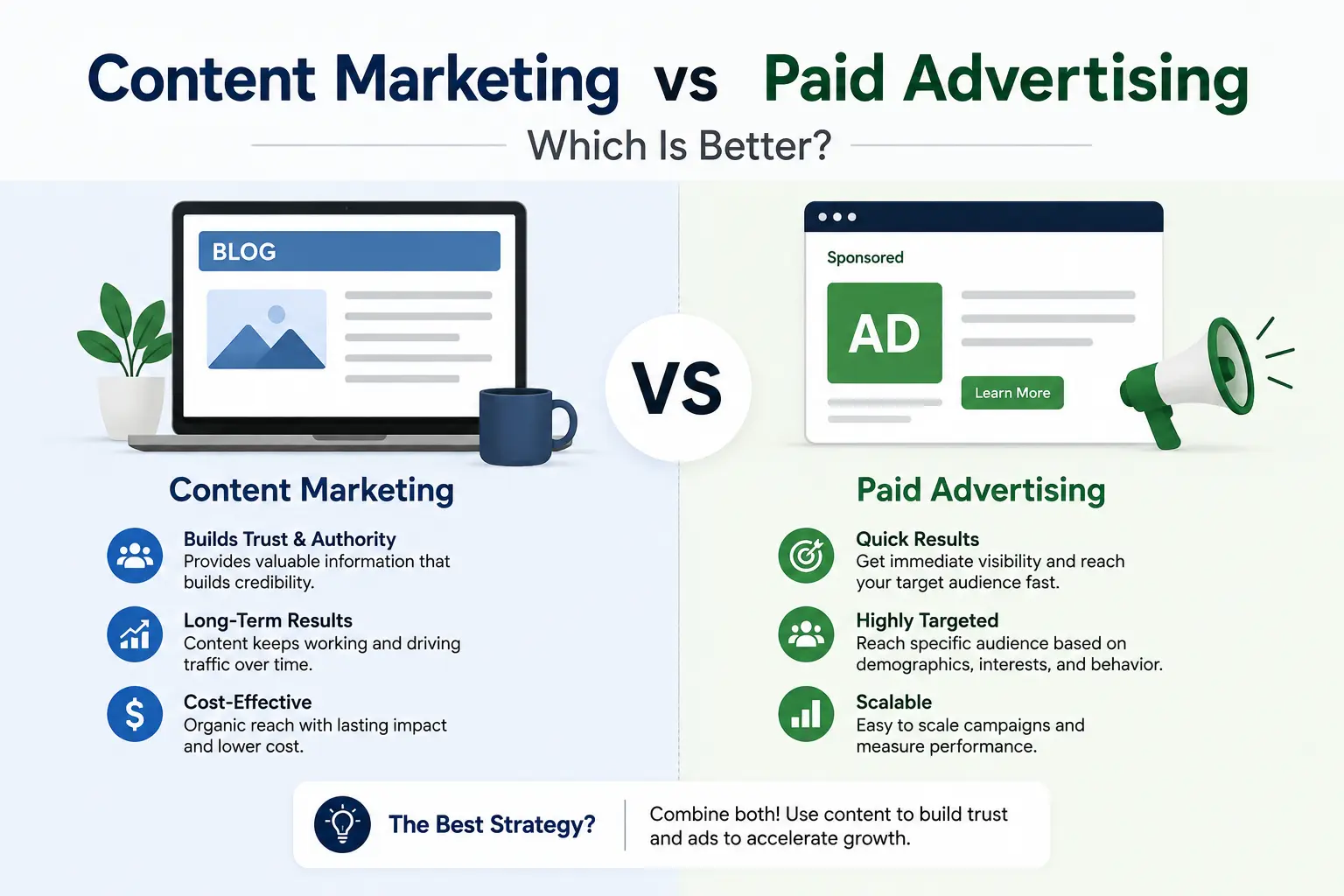
Content Marketing
- ✅ Builds long-term organic traffic and brand authority
- ✅ Lower cost per lead over time
- ✅ Improves SEO rankings and domain authority
- ❌ Takes longer to show results
- ❌ Requires consistent content production
Paid Advertising
- ✅ Immediate visibility and traffic
- ✅ Highly targeted and measurable
- ✅ Easy to scale quickly
- ❌ Costs stop delivering results the moment spending stops
- ❌ Can become expensive in competitive industries
Which Strategy Should You Choose?
The right choice depends on your business goals, timeline, and budget:
- Choose content marketing if you’re building a long-term brand, want sustainable organic traffic, and can invest time before seeing major returns.
- Choose paid advertising if you need fast results, are launching a new product, or want to test messaging and audiences quickly.
- Combine both for the best results use paid ads to generate quick wins and data while content marketing builds a durable, compounding traffic engine in the background.
Final Thoughts
Content marketing and paid advertising aren’t rivals they’re complementary tools in a well-rounded marketing strategy. Paid advertising delivers speed and precision; content marketing delivers trust and longevity. The smartest brands don’t choose one over the other they use both, strategically, to maximize short-term wins and long-term growth.