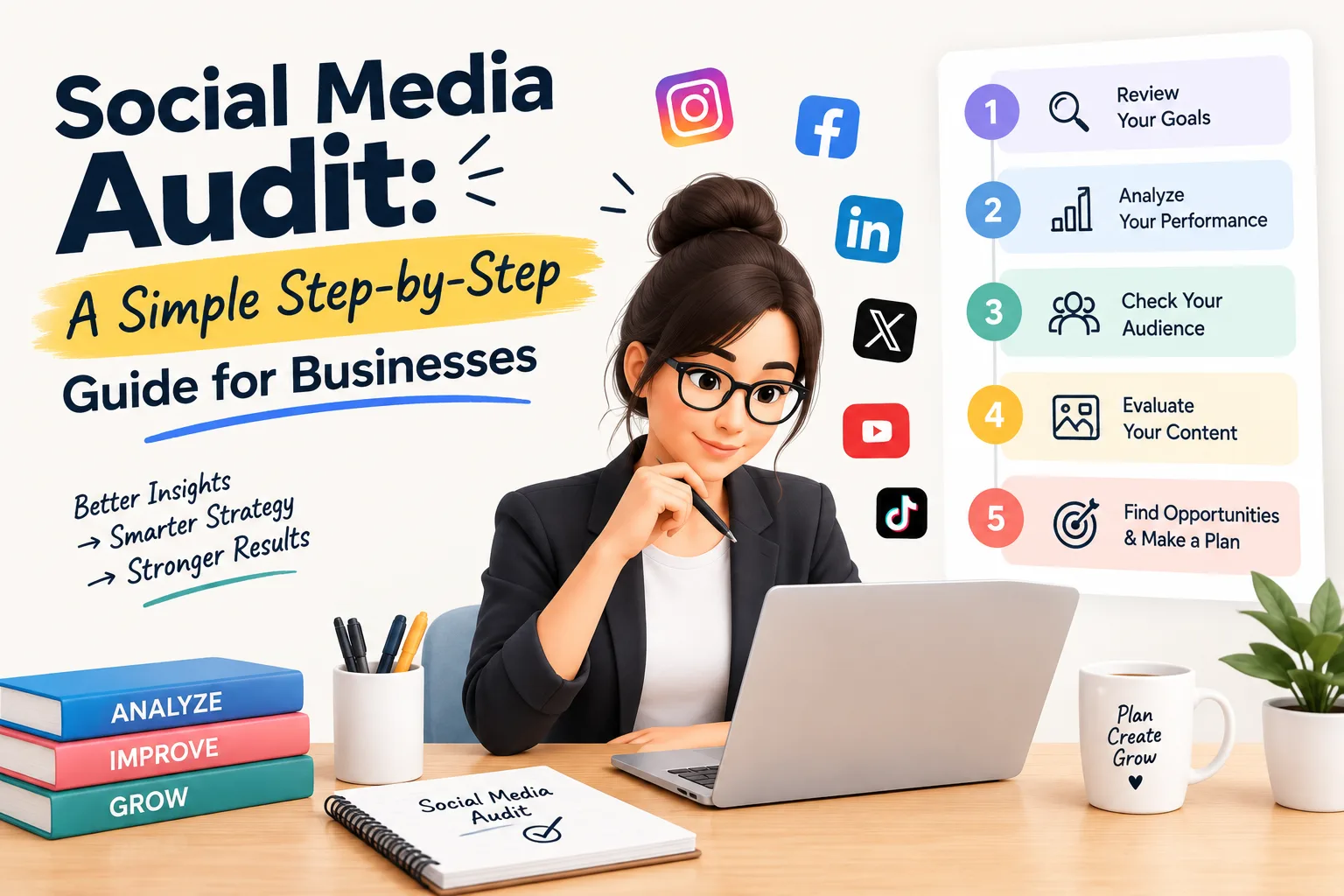
Social Media Audit: A Simple Step-by-Step Guide for Businesses
Posting every day but not seeing results? You may not need more content. You may need a social media audit.
A social media audit is a structured review of your social media accounts, content, and results. It shows what is working, what is wasting your time, and where your biggest opportunities are. In this guide, you’ll learn how to run a social media audit in seven simple steps, even if you have never done one before.
What Is a Social Media Audit?
A social media audit is a systematic check of all your business profiles, posts, audience data, and performance metrics. The goal is to compare your results against your business goals, then decide what to keep, fix, or stop.
Think of it as a health check-up for your social media strategy.
Why Your Business Needs a Social Media Audit
Regular audits help you:
- Improve ROI by focusing on the platforms and content that drive results
- Keep branding consistent across every profile
- Understand your audience better, including what they like and when they are active
- Spot outdated or fake accounts that could confuse customers or harm your reputation
- Learn from competitors and find gaps you can fill
- Set realistic goals based on real data, not guesses
Most businesses should run a full audit once or twice a year, with a quick review every quarter.
How to Do a Social Media Audit: 7 Steps
Step 1: Set Clear Goals
Before looking at any numbers, decide what you want social media to achieve. Common goals include:
- Increasing brand awareness
- Driving website traffic
- Generating leads or sales
- Improving customer support
- Building a community
Make each goal specific and measurable. For example: “Increase website clicks from Instagram by 25% in six months.”
Step 2: List All Your Social Media Accounts
Create a spreadsheet and record every account your business owns. Include:
- Platform name (Facebook, Instagram, LinkedIn, X, YouTube, TikTok, Pinterest)
- Profile URL
- Account owner or manager
- Date created
- Current follower count
Don’t forget old or abandoned profiles, and search your business name to find unofficial or impersonator accounts. Inactive pages should be updated, merged, or deleted.
Step 3: Check Profile Consistency and Branding
Review each profile for:
- Profile photo and cover image: Are they the same logo and brand style everywhere?
- Username/handle: Is it consistent and easy to find?
- Bio and description: Does it clearly explain what you do, with relevant keywords?
- Contact details and website link: Are they accurate and working?
- Call-to-action buttons: Do they point to the right pages?
Inconsistent branding makes your business look unprofessional and harder to recognize.
Step 4: Analyze Your Performance Metrics
Now look at the data. Pull reports from each platform’s built-in analytics (such as Meta Business Suite, LinkedIn Analytics, or YouTube Studio) for the last 6 to 12 months.
Key metrics to review:
- Reach and impressions: How many people see your content?
- Engagement rate: Likes, comments, shares, and saves compared with your audience size
- Follower growth: Is your audience growing steadily?
- Click-through rate (CTR): Are people clicking your links?
- Conversions: Leads, sign-ups, or sales from social media
- Response time: How quickly do you answer comments and messages?
Compare each metric to your goals from Step 1. Numbers only matter when they connect to a business outcome.
Step 5: Review Your Top and Bottom Content
Identify your top 5 and bottom 5 posts on each platform. Look for patterns:
- Which formats perform best (Reels, carousels, videos, images, text posts)?
- Which topics get the most engagement?
- What days and times get the best results?
- Which captions and hashtags attract attention?
Do more of what works and cut back on what doesn’t. This step often delivers the quickest wins.
Step 6: Understand Your Audience and Competitors
Audience: Check demographics such as age, location, gender, and interests. Does your audience match your ideal customer? If not, your content or targeting may need to change.
Competitors: Review two to five competitors. Note:
- Which platforms they prioritize
- How often they post
- What content gets the most engagement
- How they interact with their followers
You are not copying them. You are looking for gaps and ideas to do better.
Step 7: Create an Action Plan
An audit is only useful if it leads to action. Summarize your findings into a simple plan:
- Fix: Update bios, images, links, and broken elements
- Stop: Pause platforms or content types that deliver no value
- Start: Try new formats, topics, or posting schedules
- Scale: Invest more in your best-performing channels
- Measure: Set new KPIs and a date for your next audit
Assign an owner and a deadline to each task so nothing gets forgotten.
Social Media Audit Checklist (Quick Version)
- Goals defined and measurable
- All accounts listed, including inactive ones
- Branding and bios consistent across platforms
- Analytics reviewed for the last 6 to 12 months
- Top and bottom content analyzed
- Audience insights documented
- Competitors benchmarked
- Action plan created with deadlines
Best Tools for a Social Media Audit
You don’t need expensive software to start. Useful options include:
- Native analytics: Meta Business Suite, LinkedIn Analytics, YouTube Studio, TikTok Analytics
- Google Analytics: To track social traffic and conversions on your website
- Scheduling and reporting tools: Buffer, Hootsuite, Sprout Social
- Spreadsheets: Google Sheets or Excel for a free audit template
Common Social Media Audit Mistakes to Avoid
- Focusing only on follower count instead of engagement and conversions
- Ignoring platforms where your audience actually spends time
- Not documenting results, which makes progress impossible to track
- Skipping the action plan
- Auditing once and never again
Frequently Asked Questions
1. How often should I do a social media audit?
Do a full audit every six to twelve months, and a lighter check each quarter.
2. How long does a social media audit take?
A small business can finish one in a few hours to a day. Larger brands with many accounts may need several days.
3. Do I need a social media audit template?
It isn’t required, but a template keeps you organized and makes it easy to compare results over time.
4. What is the most important metric in a social media audit?
It depends on your goals. For most businesses, engagement rate and conversions matter more than follower count.
Final Thoughts
A social media audit takes the guesswork out of your strategy. By reviewing your accounts, analyzing performance, learning from competitors, and acting on what you find, you can save time, improve results, and grow with confidence.
Start with one platform, follow the seven steps above, and make auditing a regular habit. Your future results will thank you.