Instagram vs LinkedIn for B2B Marketing: Which Platform Is Better?
Choosing between Instagram vs LinkedIn for B2B marketing is one of the most common dilemmas B2B marketers face when planning their social media strategy. While LinkedIn has long been the default choice for business-to-business brands, Instagram’s growing professional audience and powerful visual storytelling tools have made it a serious contender. This guide breaks down both platforms across the metrics that matter most audience, lead generation, content format, advertising costs, and ROI so you can decide which one deserves more of your marketing budget.
Quick Answer: LinkedIn vs Instagram for B2B
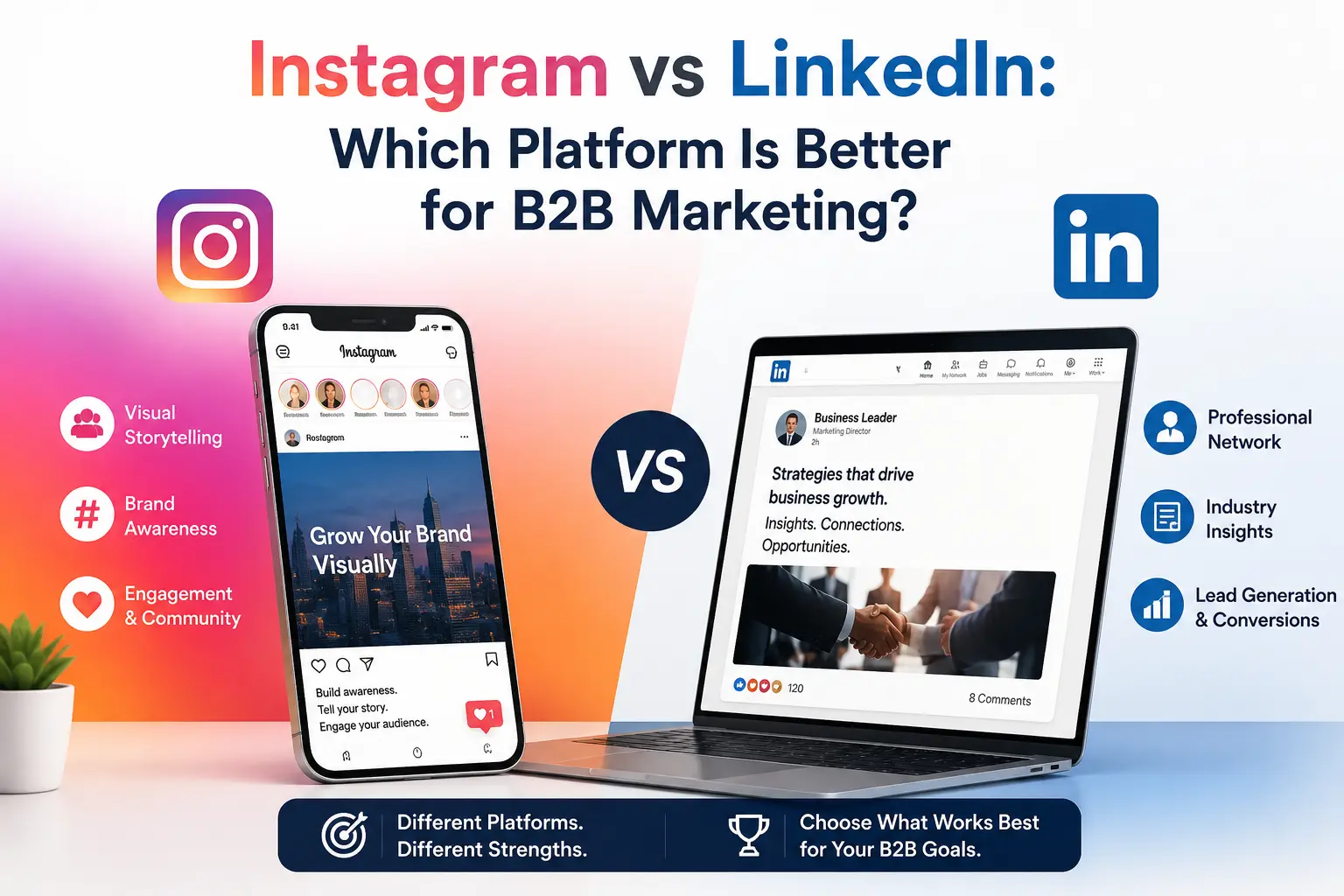
If you need one-line guidance: LinkedIn is generally better for B2B lead generation and decision-maker targeting, while Instagram is better for brand awareness, employer branding, and humanizing your company. Most successful B2B strategies today use both platforms, but for different goals in the funnel.
Why This Comparison Matters for B2B Brands
B2B buying cycles are longer and involve multiple stakeholders, which means your social strategy needs to support awareness, trust-building, and conversion at different stages. Picking the wrong platform or spreading your team too thin across both without a clear purpose for each wastes budget and content resources. Understanding the strengths of Instagram vs LinkedIn for B2B marketing helps you allocate effort where it actually drives pipeline.
Instagram for B2B Marketing: Strengths and Limitations
Strengths
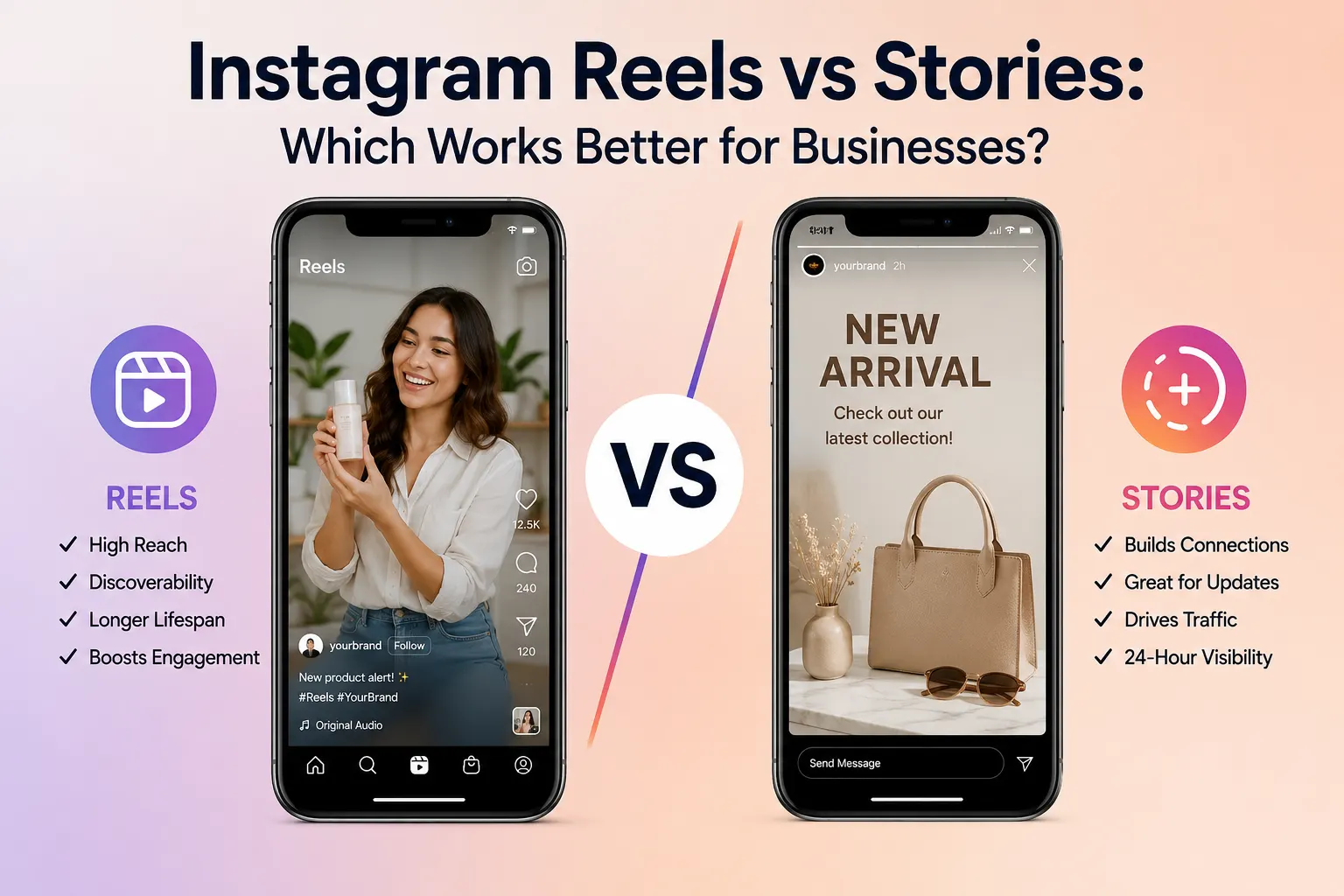
- Visual storytelling: Reels, carousels, and Stories are ideal for showcasing company culture, product demos, and behind-the-scenes content.
- Employer branding: Instagram is highly effective for recruitment marketing and showing the human side of your company.
- Younger decision-makers: As millennials and Gen Z move into procurement and management roles, Instagram’s demographic overlap with B2B buyers is increasing.
- Lower ad costs: Cost-per-click on Instagram is typically lower than LinkedIn, making it attractive for top-of-funnel awareness campaigns.
Limitations
- Weak native lead-generation tools compared to LinkedIn’s Lead Gen Forms.
- Professional targeting (job title, industry, company size) is less precise.
- Content needs to be highly visual, which can be resource-intensive for B2B teams without design support.
LinkedIn for B2B Marketing: Strengths and Limitations
Strengths
- Precise B2B targeting: Filter by job title, seniority, industry, company size, and skills unmatched by any other platform.
- Higher-intent audience: Users are in a professional mindset, making them more receptive to whitepapers, case studies, and demo requests.
- Native lead generation: LinkedIn Lead Gen Forms and Sales Navigator integrate directly with CRM and outbound workflows.
- Thought leadership: Long-form posts and articles help executives and sales teams build authority and trust.
Limitations
- Higher cost-per-click and cost-per-lead than most other platforms.
- Organic reach can be inconsistent without consistent posting and employee advocacy.
- Content can feel repetitive or overly formal if not executed well.
Instagram vs LinkedIn: Side-by-Side Comparison
| Factor | ||
|---|---|---|
| Primary use case | Brand awareness, culture, recruitment | Lead generation, thought leadership |
| Targeting precision | Interest and demographic-based | Job title, industry, company size |
| Average ad cost | Lower CPC | Higher CPC, higher lead quality |
| Content format | Visual: Reels, Stories, carousels | Text posts, articles, documents, video |
| Best funnel stage | Top of funnel (awareness) | Middle to bottom of funnel (consideration, conversion) |
| Ideal for | Consumer-facing B2B, SaaS with strong branding | Professional services, enterprise SaaS, consulting |
Which Platform Should You Choose?
The right answer depends on your goals:
- Choose LinkedIn if your priority is generating qualified leads, reaching senior decision-makers, or establishing executive thought leadership.
- Choose Instagram if your priority is building brand awareness, attracting talent, or reaching a younger, digitally native B2B audience.
- Use both if you have the resources Instagram to build awareness and humanize your brand, LinkedIn to convert that awareness into pipeline.
Best Practices for B2B Marketing on Each Platform
- On LinkedIn: Post consistently 3–5 times per week, mix thought-leadership articles with data-driven carousels, and encourage employee advocacy to boost organic reach.
- On Instagram: Use Reels to show product-in-action content, leverage Stories for polls and quick engagement, and maintain a consistent visual identity across posts.
- On both: Track platform-specific KPIs engagement rate and follower growth on Instagram; lead volume, cost-per-lead, and pipeline influence on LinkedIn.
Frequently Asked Questions
Is LinkedIn better than Instagram for B2B lead generation?
Yes, LinkedIn generally outperforms Instagram for direct B2B lead generation due to its precise professional targeting and native lead-gen tools.
Can Instagram work for B2B companies?
Yes. Instagram works well for B2B brand awareness, employer branding, and reaching younger buyers, though it’s less effective for direct lead capture.
Should a B2B company use both Instagram and LinkedIn?
Most well-resourced B2B marketing teams use both platforms, assigning Instagram to top-of-funnel awareness and LinkedIn to lead generation and conversion.