Zero-click searches and how to still get visibility
Search used to work in a straight line: type a query, scan the blue links, click one, land on a website. That line has broken. Today, the majority of Google searches end on the results page itself no click, no visit, no session in your analytics.
This is the era of zero-click searches, and it’s forcing a hard rethink of what “ranking well” even means. If your SEO strategy is still built entirely around click-through rate, you’re optimizing for a shrinking slice of the pie. This guide breaks down what’s driving the shift and exactly how to earn visibility even when nobody clicks.
What Are Zero-Click Searches?
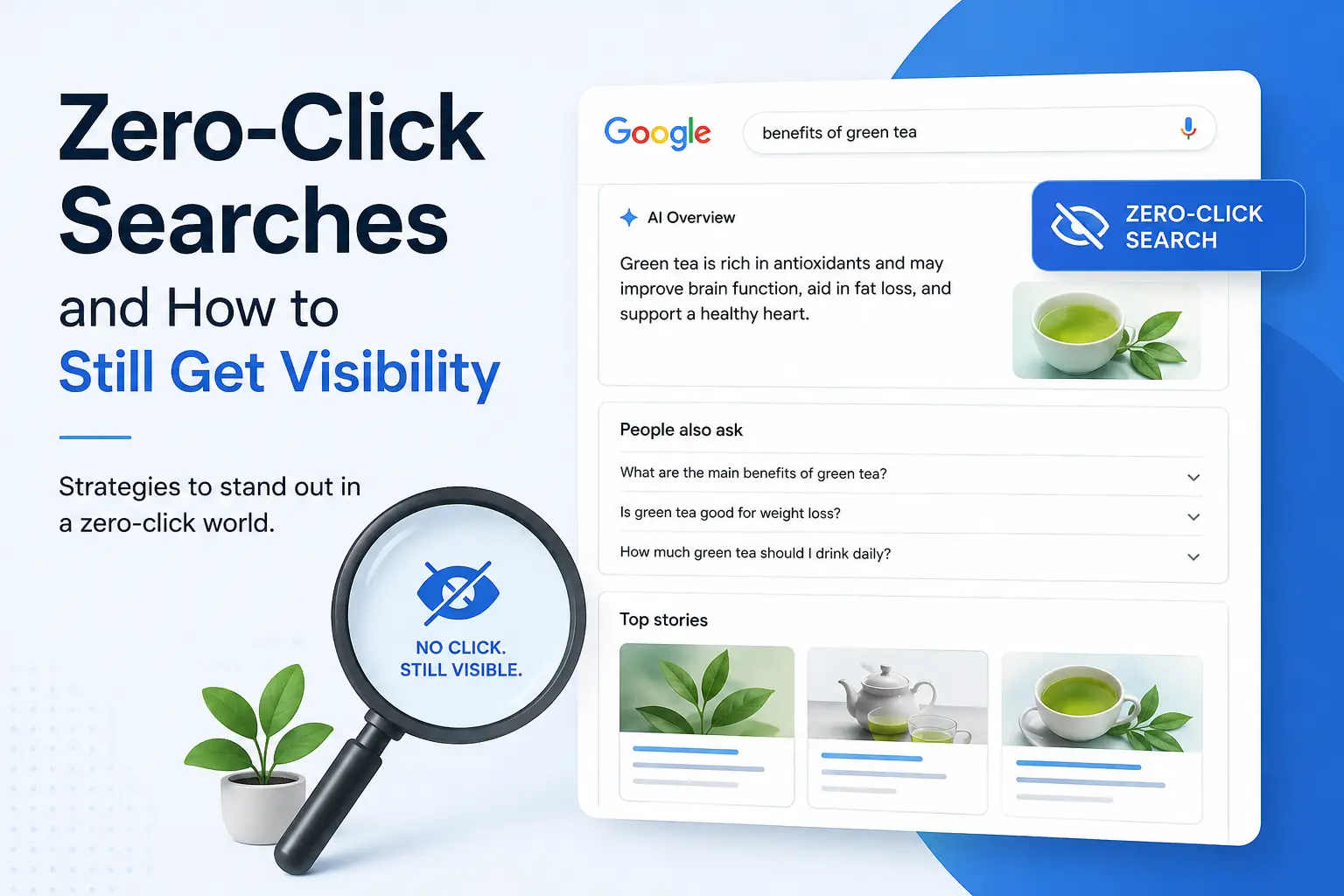
A zero-click search happens when a user gets their answer directly on the search engine results page (SERP) and never visits an outside website. Featured snippets, knowledge panels, “People Also Ask” boxes, local packs, direct answer boxes, and increasingly AI Overviews all satisfy the query before a single link is clicked.
Ask Google “how many ounces in a cup” or “current USD to GBP rate,” and the answer appears instantly. No website needed. That’s zero-click search in its simplest form and it now happens on a majority of all queries.
Why Zero-Click Searches Are Accelerating
A few forces are compounding at once:
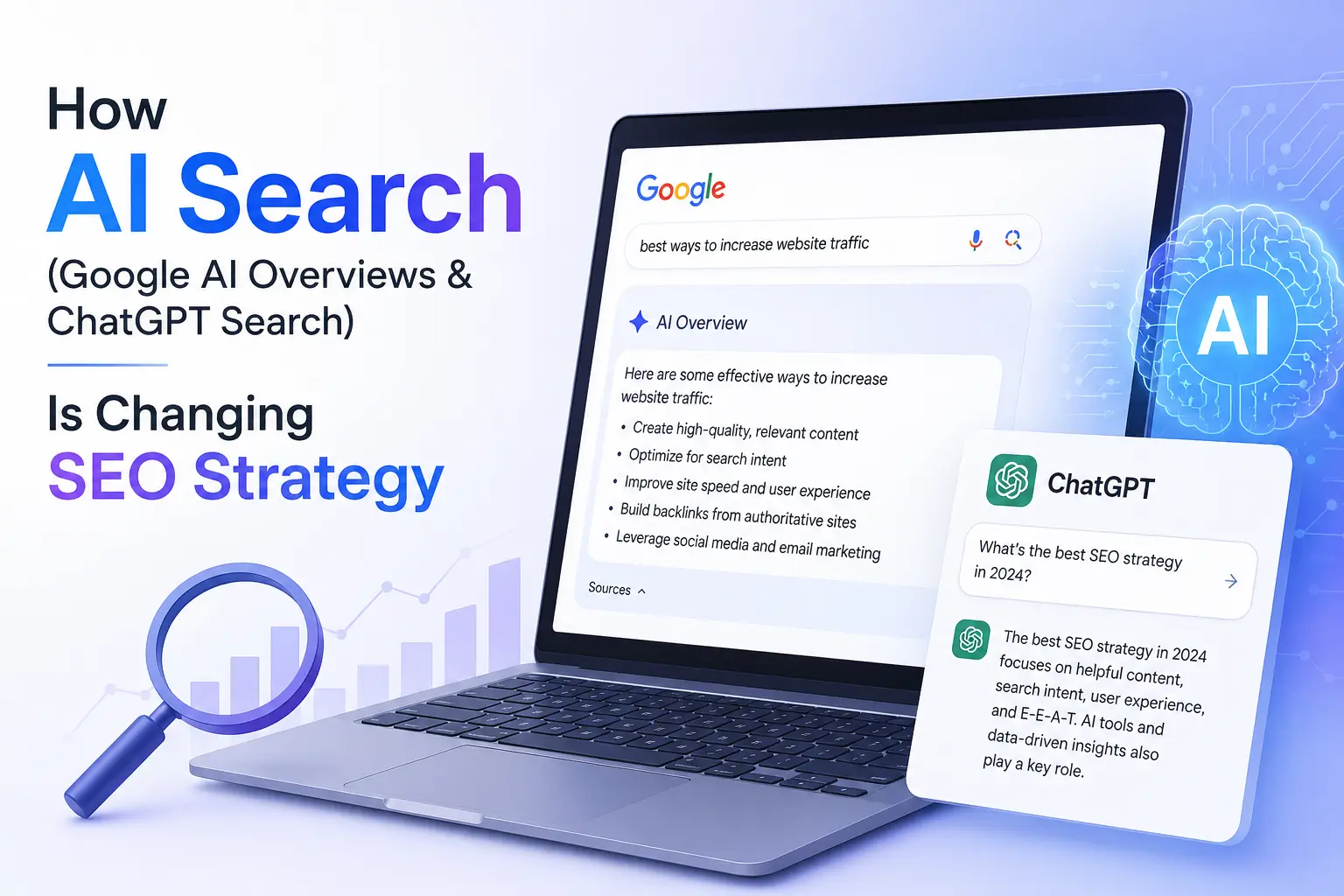
- AI Overviews are expanding fast. Google’s AI-generated summaries now appear on a large and growing share of queries, and searches that trigger an AI Overview show dramatically higher zero-click rates than standard queries often in the 80%+ range, according to recent industry tracking.
- AI Mode and conversational search go further still. When Google’s AI Mode fully answers a query in a conversational format, click-through rates drop even lower than with standard AI Overviews.
- Rich SERP features have been chipping away at clicks for years. Featured snippets, knowledge panels, and instant-answer modules predate generative AI the trend has been building since 2019, when zero-click search first crossed the 50% mark.
- Answer engines beyond Google are growing. ChatGPT Search, Perplexity, and other AI search tools are pulling query volume away from traditional search entirely, each with their own zero-click dynamics.
The practical result: ranking #1 no longer guarantees a visit. It increasingly guarantees an impression your brand shown, cited, or quoted, with the click optional.
The Silver Lining: Fewer Clicks, Higher Intent
It’s not all bad news. Multiple industry analyses in 2026 point to the same pattern: the users who do click through after seeing an AI-generated answer convert at a meaningfully higher rate than traditional organic visitors. They’ve already read a summary, decided they need more, and arrived at your site closer to a decision.
In other words, zero-click search filters out casual, top-of-funnel curiosity and leaves you with visitors who are further along. Traffic volume may fall but the traffic that remains can be worth more per visitor.
That reframes the goal: stop measuring success by raw clicks alone, and start measuring visibility, citations, and qualified traffic together.
8 Strategies to Get Visibility Despite Zero-Click Search
1. Optimize for Featured Snippets and “Position Zero”
Structure content to directly answer common questions in 40–60 word blocks near the top of the page. Use clear question-style H2/H3 headers that mirror how people actually search (“How does X work,” “What is the best way to Y”). Even without a click, snippet placement puts your brand name in front of the searcher.
2. Build for AI Overviews and AI Search Citations (GEO)
Generative Engine Optimization (GEO) is the practice of structuring content so AI systems can easily extract and cite it. Research from Princeton and Georgia Tech found that content built with clear factual density, named sources, structured headers, and FAQ sections saw meaningfully higher AI citation rates. Practical steps:
- Lead with a direct, factual answer before adding nuance.
- Cite original data, studies, or named sources rather than vague claims.
- Use FAQ schema and question-based subheadings.
- Keep paragraphs scannable AI systems extract cleanly-structured chunks, not walls of text.
3. Use Structured Data (Schema Markup)
FAQ schema, HowTo schema, Article schema, and Organization schema all help both traditional search engines and AI crawlers understand and surface your content accurately increasing the odds you’re the one quoted, not a competitor.
4. Strengthen E-E-A-T Signals
Experience, Expertise, Authoritativeness, and Trustworthiness matter more, not less, in an AI-mediated search world. Author bios, credentials, original research, first-hand experience, and transparent sourcing all increase the likelihood that Google and AI models treat your content as citation-worthy.
5. Prioritize Brand Search and Direct Traffic
When users can’t click through from a search result, they sometimes remember the brand and search for it directly later, or type in the URL. Building brand recognition through consistent citations, PR, and off-site mentions compounds this “delayed” traffic that never shows up in a first-click attribution model.
6. Own Local and “Near Me” SERP Features
Local packs, Google Business Profile panels, and map results are themselves zero-click surfaces but they’re prime real estate for local businesses. Keep your Business Profile complete, current, and reviewed to dominate this space even when users never reach your website.
7. Diversify Beyond Organic Search Traffic
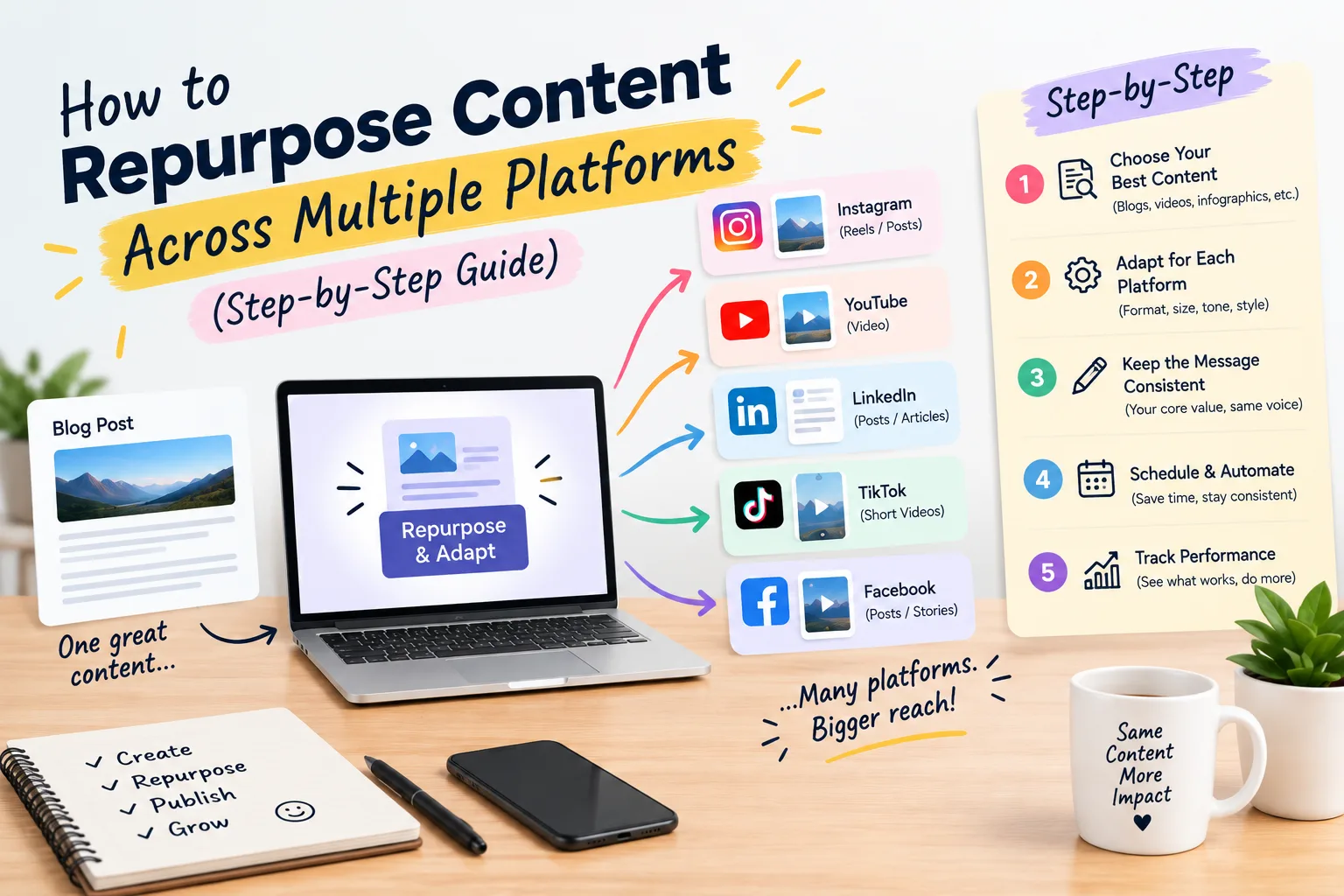
Relying solely on organic click volume is increasingly risky. Layer in email lists, owned communities, YouTube, newsletters, and social channels so visibility doesn’t live or die by SERP click behavior alone.
8. Shift Your Reporting Metrics
Stop reporting success purely on sessions and clicks. Track:
- Impressions and average position in Google Search Console
- Brand search volume over time
- Share of voice / citation frequency in AI Overviews
- Conversion rate and quality of the traffic that does arrive
Zero-Click Search: Key Takeaways
| Old SEO Mindset | Zero-Click SEO Mindset |
|---|---|
| Optimize for clicks | Optimize for visibility and citations |
| Rank #1 in blue links | Get quoted in the answer itself |
| Measure success by sessions | Measure success by impressions, brand lift, and conversion quality |
| One SEO channel (Google) | Multi-engine presence (Google, AI Overviews, ChatGPT Search, Perplexity) |
Frequently Asked Questions
1.Is SEO still worth it if most searches are zero-click?
Yes. Zero-click search hasn’t eliminated the value of ranking it’s changed what ranking delivers. Visibility inside the SERP or an AI Overview still builds brand awareness and drives some direct and brand-search traffic, even without an immediate click.
2.What’s the difference between SEO and GEO (Generative Engine Optimization)?
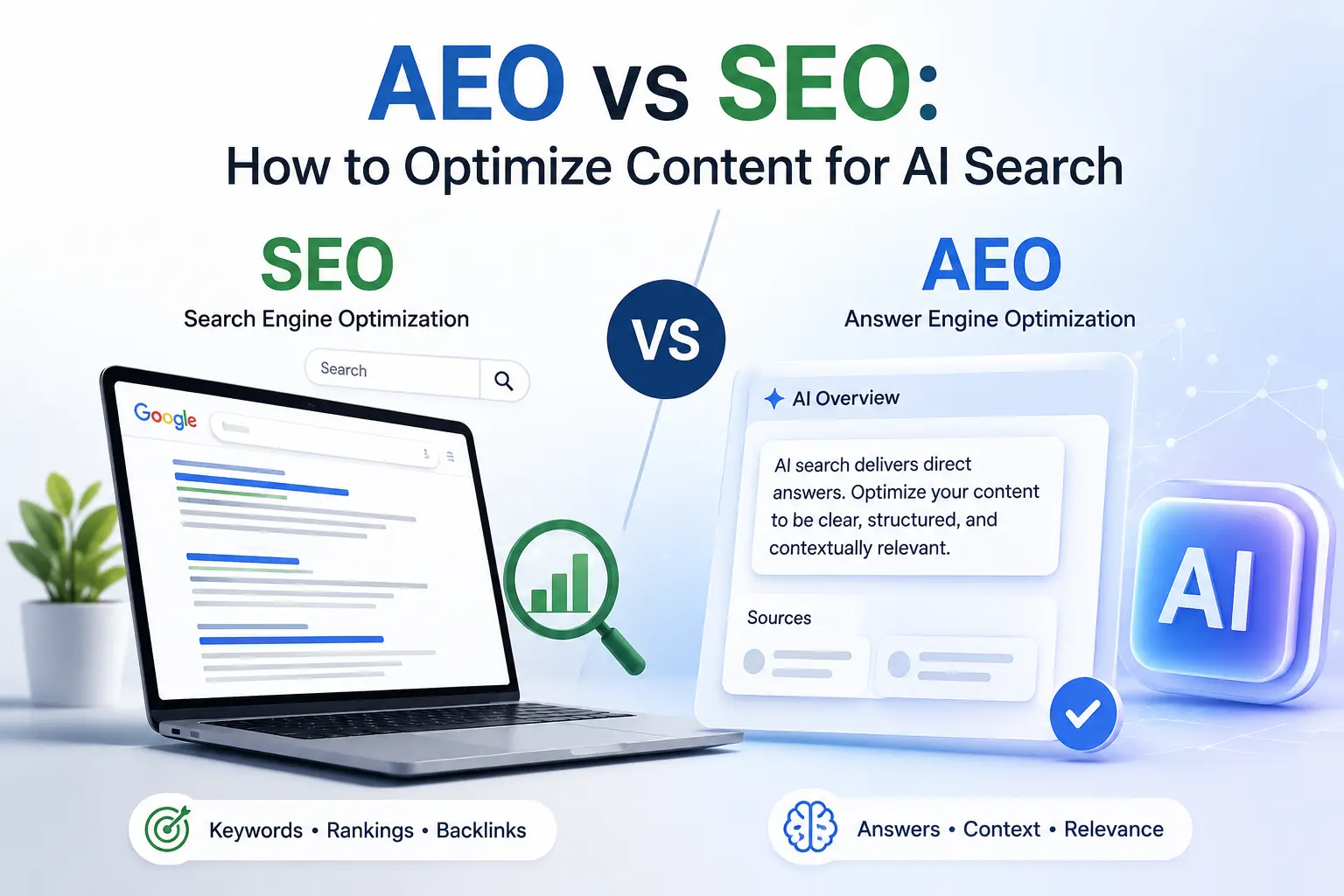
Traditional SEO optimizes for ranking in a list of links. GEO optimizes for being extracted, summarized, and cited by AI-generated answers which relies more heavily on clear structure, factual accuracy, and authoritative sourcing than on keyword placement alone.
3.Which industries are hit hardest by zero-click search?
Informational content definitions, quick facts, conversions, simple how-tos is most exposed, since AI Overviews can fully answer these without a click. Transactional and highly specific queries (bookings, purchases, in-depth comparisons) retain more click-through demand.