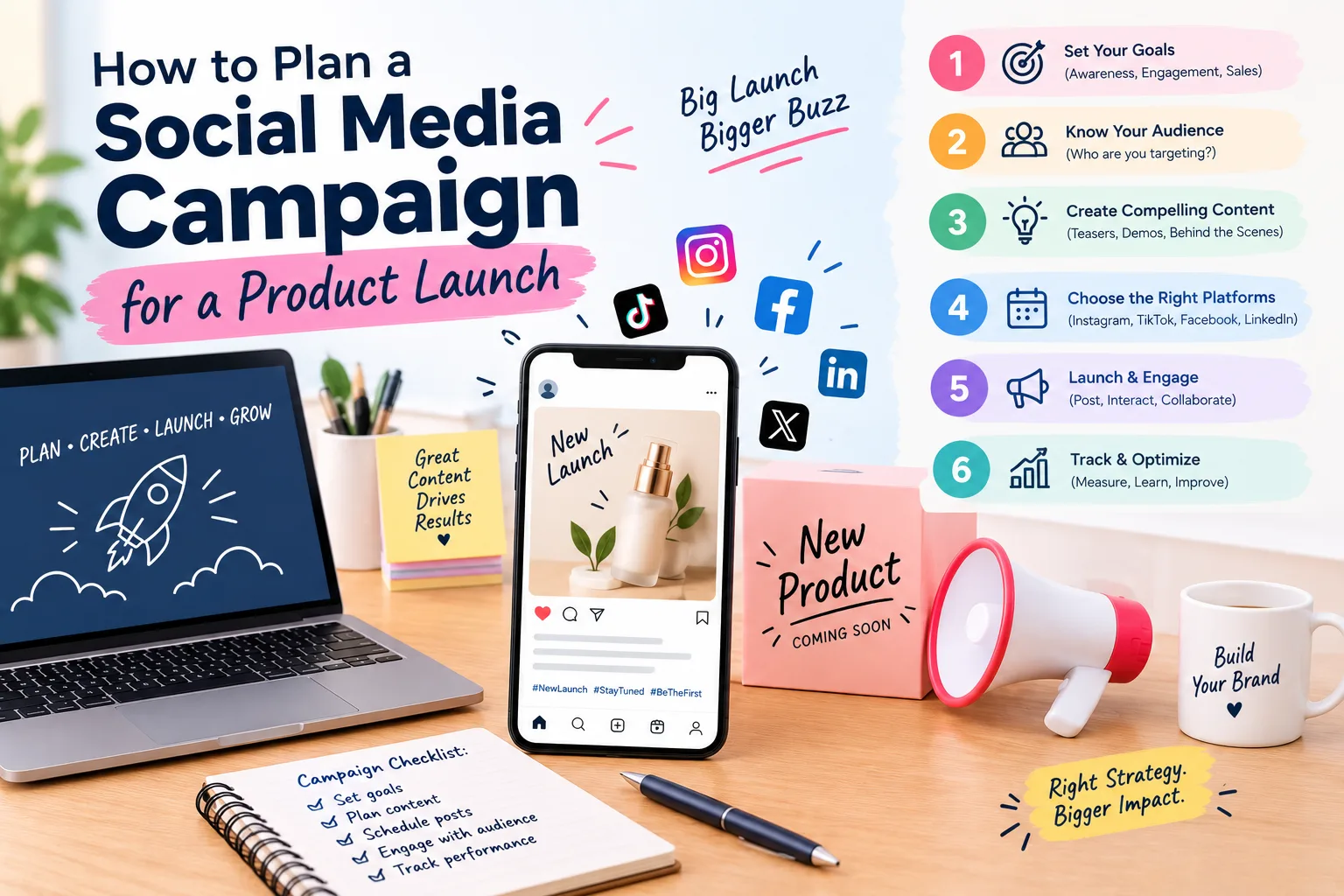
How to Plan a Social Media Campaign for a Product Launch (7 Steps)
A great product can still flop if nobody knows it exists. A well-planned social media campaign for a product launch builds anticipation before release day, drives sales during the launch window, and keeps customers engaged afterward.
This guide walks you through a seven-step framework you can use whether you’re launching a physical product, a SaaS tool, or a mobile app.
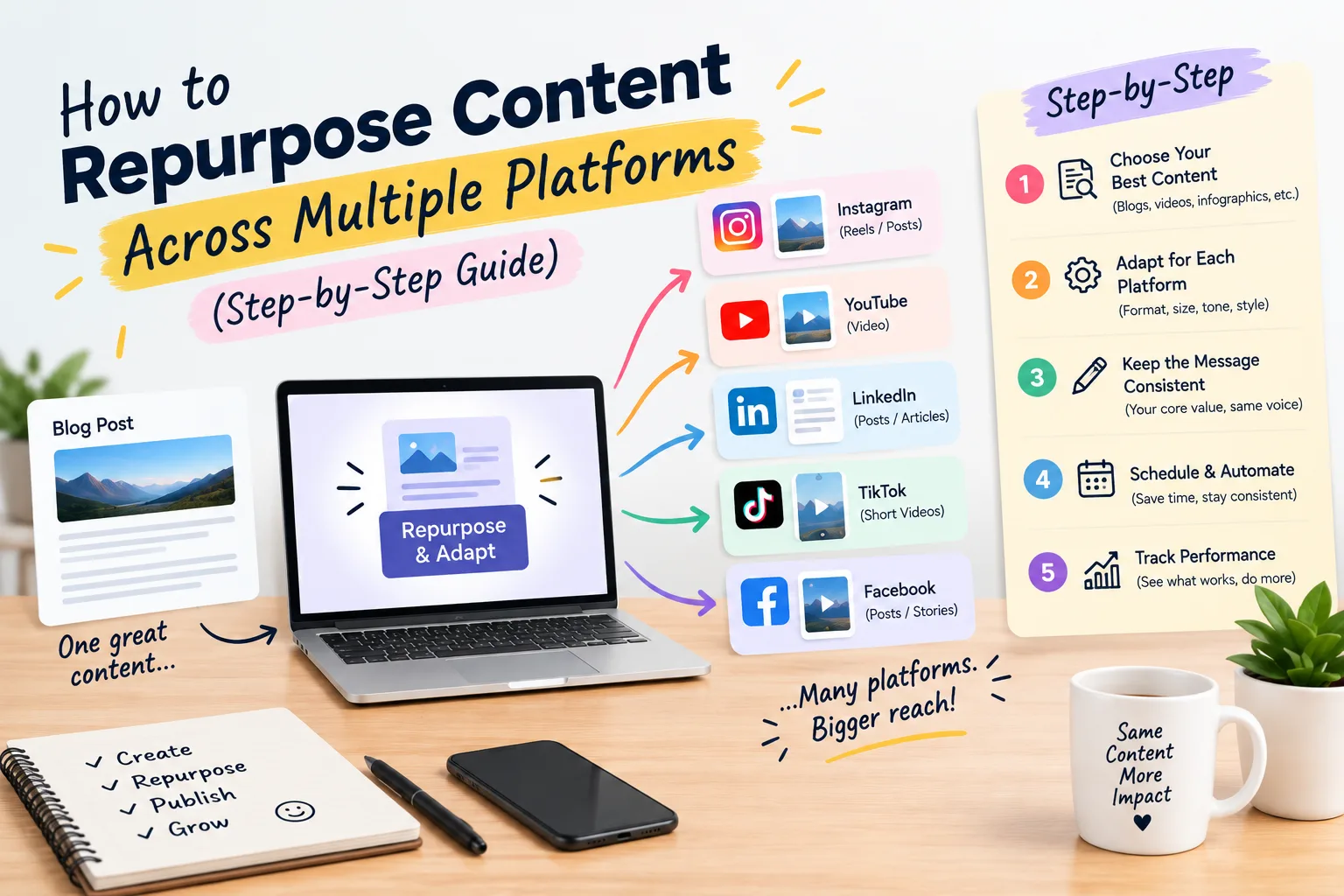
Why a Social Media Launch Campaign Matters
Social platforms are where your audience discovers, researches, and shares new products. A structured launch campaign helps you:
- Build awareness and a waitlist before the product is available
- Create social proof through early reviews and user-generated content
- Drive traffic and conversions on launch day
- Collect real-time feedback to improve the product
Step 1: Set Clear, Measurable Goals
Every campaign starts with a goal. Vague aims like “get more exposure” can’t be measured, so use the SMART framework (Specific, Measurable, Achievable, Relevant, Time-bound).
Examples of strong launch goals:
- Collect 2,000 waitlist sign-ups before launch day
- Generate 500 sales in the first 14 days
- Grow Instagram followers by 20% in 30 days
- Reach 100,000 impressions with the launch hashtag
Choose one primary goal and two or three supporting metrics so your team stays focused.
Step 2: Define Your Target Audience
Your launch content should speak to a specific person, not “everyone.” Build a simple audience profile covering:
- Demographics: age, location, job role
- Pain points: the problem your product solves
- Platform habits: where they spend time and what content they engage with
- Buying triggers: what makes them say yes (price, reviews, social proof)
Use your existing customer data, social analytics, and competitor audiences to validate your assumptions.
Step 3: Choose the Right Social Media Platforms
You don’t need to be everywhere. Pick the two or three platforms where your audience is most active.
| Platform | Best for | Launch content ideas |
|---|---|---|
| Visual and lifestyle products | Reels, teasers, Stories countdowns | |
| TikTok | Younger audiences, viral reach | Behind-the-scenes, demos, trends |
| B2B and SaaS | Thought leadership, case studies | |
| YouTube | Detailed demos | Launch video, tutorials |
| X (Twitter) | Real-time updates | Announcements, live Q&A |
| Community and paid ads | Groups, events, retargeting ads |
Step 4: Craft Your Core Message and Creative Concept
Before creating posts, define:
- Your value proposition: one sentence explaining why your product matters
- A launch hashtag: short, unique, and easy to spell
- Visual identity: consistent colors, fonts, and tone across all assets
- A hook: the story, offer, or mystery that makes people curious
Consistency makes your campaign recognizable as people scroll across platforms.
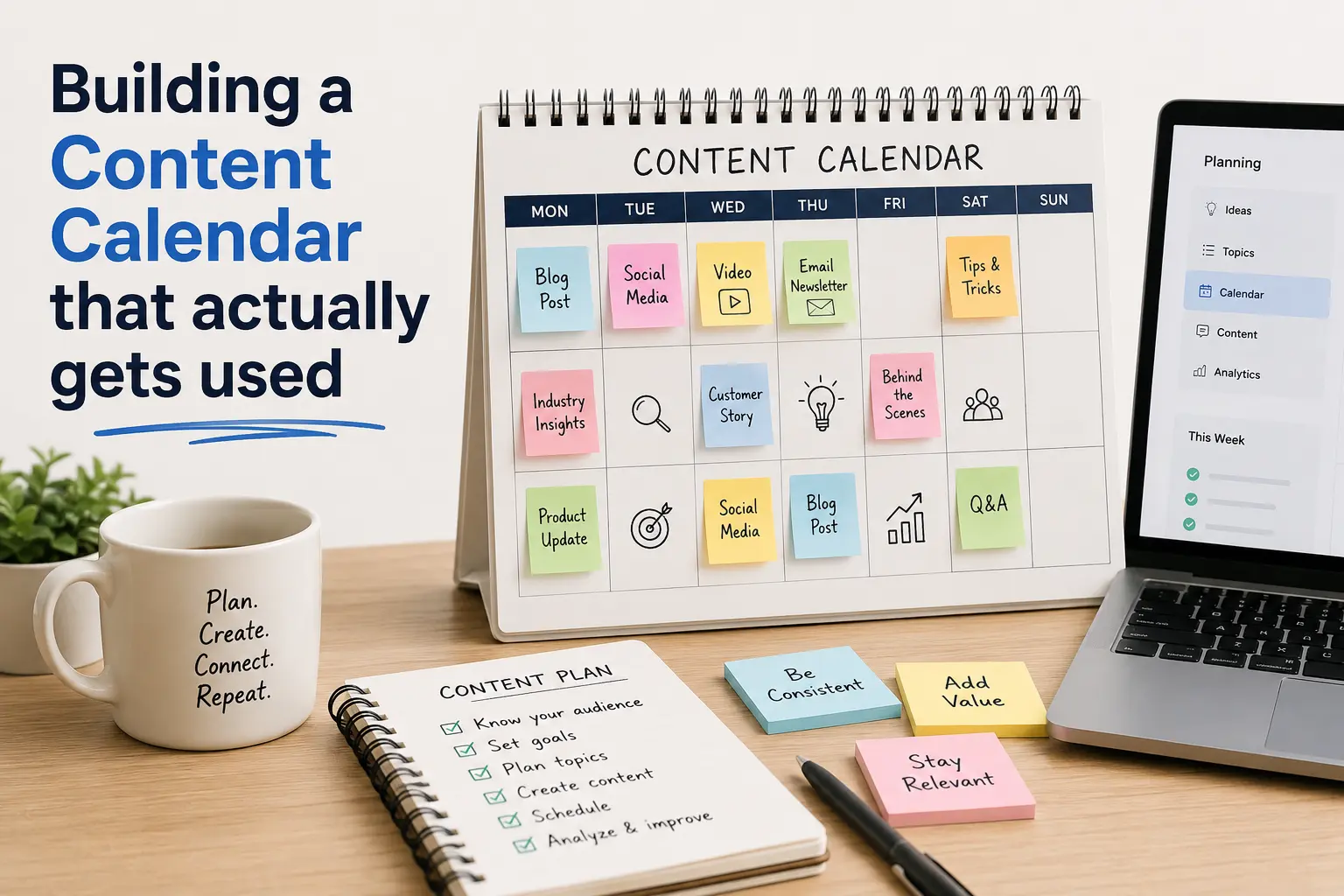
Step 5: Build a Three-Phase Content Calendar
The most effective product launch campaigns run in three phases.
Phase 1: Pre-launch (2 to 4 weeks before)
Build curiosity and collect leads.
- Teaser posts and countdown stickers
- Behind-the-scenes content showing the product being made
- Waitlist or early-access sign-up links
- Sneak peeks for influencers and brand advocates
Phase 2: Launch day
Concentrate your energy for maximum impact.
- Announcement posts on every active channel
- Live streams, Q&As, or product demos
- Limited-time launch offers
- Pinned posts and updated bio links
Phase 3: Post-launch (1 to 4 weeks after)
Sustain momentum and turn buyers into advocates.
- Customer testimonials and reviews
- User-generated content reposts
- How-to tutorials and use-case videos
- Retargeting ads for visitors who didn’t convert
Map each post to a date, platform, format, caption, and call to action in a shared calendar.
Step 6: Leverage Influencers, Paid Ads, and Community
Organic reach alone rarely carries a launch. Combine three levers:
- Influencer partnerships: Micro-influencers (10K to 100K followers) often deliver higher engagement and trust than celebrities. Send them products early so their content goes live around launch day.
- Paid social ads: Use paid campaigns to reach lookalike audiences and retarget engaged users. Start with a small test budget, then scale the best performers.
- Community engagement: Reply to comments, join relevant conversations, and encourage customers to share their experiences with your launch hashtag.
Step 7: Track, Measure, and Optimize
Review performance daily during launch week and weekly afterward. Key metrics include:
- Reach and impressions: how many people saw your content
- Engagement rate: likes, comments, shares, and saves
- Click-through rate (CTR): traffic to your landing page
- Conversion rate: sign-ups or purchases from social traffic
- Cost per acquisition (CPA): the efficiency of paid campaigns
Use native analytics (Meta Insights, TikTok Analytics) along with UTM parameters and Google Analytics to see which posts drive real results. Double down on what works and pause what doesn’t.
Common Mistakes to Avoid
- Starting promotion only on launch day
- Posting the same content on every platform without adapting it
- Ignoring comments and direct messages
- Skipping a clear call to action
- Failing to set goals or track results
Product Launch Social Media Checklist
- SMART goals defined
- Audience and platforms selected
- Launch hashtag and visual identity ready
- Content calendar for all three phases
- Influencer outreach completed
- Ad budget and creatives approved
- Landing page and tracking links tested
- Community management plan in place
Frequently Asked Questions
How far in advance should I start a social media campaign for a product launch?
Begin teasing your product two to four weeks before launch. For larger or more complex products, six to eight weeks gives you time to build a waitlist and line up influencers.
Which social media platform is best for a product launch?
It depends on your audience. Instagram and TikTok suit consumer products, LinkedIn works best for B2B and software, and YouTube is ideal for detailed demos.
How much should I spend on social media ads for a launch?
There’s no universal figure. Many brands allocate 20 to 30 percent of their launch marketing budget to paid social, starting with small tests before scaling.
How do I measure the success of my launch campaign?
Compare results against your original SMART goals, using metrics like reach, engagement rate, conversion rate, and cost per acquisition.